


Kemal Deveci
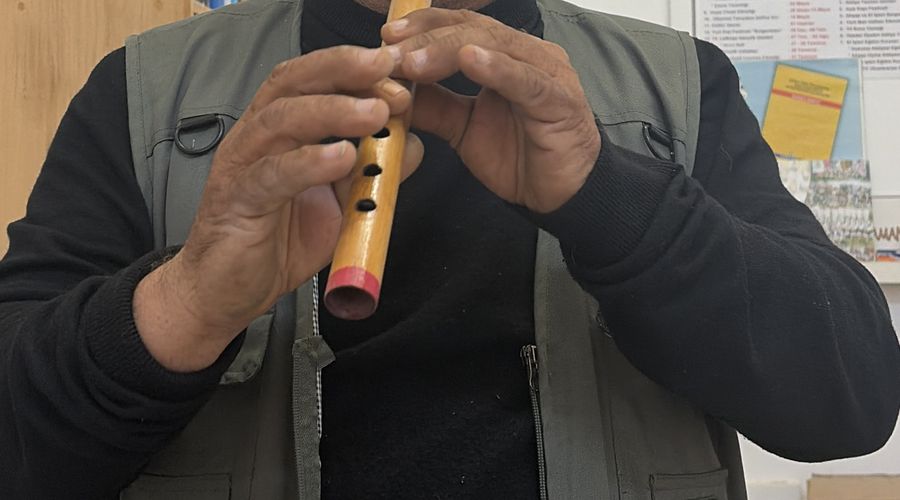
Kemal Deveci was born on August 1, 1948, in Kaleburnu as one of nine siblings. A father of four, he spent many years working in animal husbandry and farming, while also becoming an important bearer of cultural heritage. For nearly 60 years, he has been playing the zurna at weddings, continuing this tradition since 1966 together with his friend Aziz Kahraman.
His connection to art and the public has not been limited to music. For 12 years, he prepared and presented the television program “Karpasiya” on Ada TV, traveling to 242 villages and neighborhoods across Cyprus, where he earned the love and respect of the people through direct engagement.
One of the most striking aspects of Kemal Deveci’s life is his childhood dream. “I wanted to have a profession that would be watched by the public,” he says. Due to poverty and lack of opportunities, he had to leave school after primary education and began working as a shepherd. Despite these hardships, he never let go of his dream.
The ethnography museum and the “Cyprus House” he established through his own efforts are among the strongest reflections of his dedication to culture. Over the years, he collected hundreds of objects—sometimes from discarded materials or abandoned houses—and carefully preserved them. Today, these museums exhibit a rich collection of items representing Cypriot cultural heritage, all gathered with passion and great personal satisfaction.
Kemal Deveci also mastered the art of kaval-making, which he began at the age of 12. In the past, shepherds would craft simple instruments from reeds cut near streams to pass the time in the fields. However, in his hands, this practice became a refined art form. According to him, making a kaval is not just about cutting the reed, but about giving it the correct tone and musical scale. Even the smallest millimetric difference in the holes or the mouthpiece can significantly affect the sound.
He makes his kavals from special reeds cut from moist riverbanks and uses oleander wood for the mouthpiece (known as the “tongue/dil”). He measures the instrument using traditional hand-based units such as “span” (karış) and “finger” (parmak). One of the holes on the kaval is called the “straw hole” (saman deliği) in Turkish and the “swallow hole” (kırlangıç deliği) in Greek, named after the openings in old village roofs used for pouring straw. He also notes that the instrument known as “kaval” in the Cypriot dialect corresponds to what is called a “fipple flute” (dilli düdük) in standard Turkish.
Today, kaval-making has nearly disappeared in Cyprus. Deveci expresses deep sorrow that this art may vanish after him, as there are no longer any practitioners. Despite this, he continues to produce kavals, meeting ongoing demand and sending his instruments to various regions.
He has received numerous awards from countries such as Ukraine and Kyrgyzstan, and he is frequently invited to international festivals. Yet, for him, the greatest achievement is preserving and passing on Cypriot culture to future generations.
Kemal Deveci is a master who, despite all difficulties, never abandoned his dreams, created culture through his labor, and carried the past into the future. His life stands as a powerful reminder that “everything gains value as it disappears.”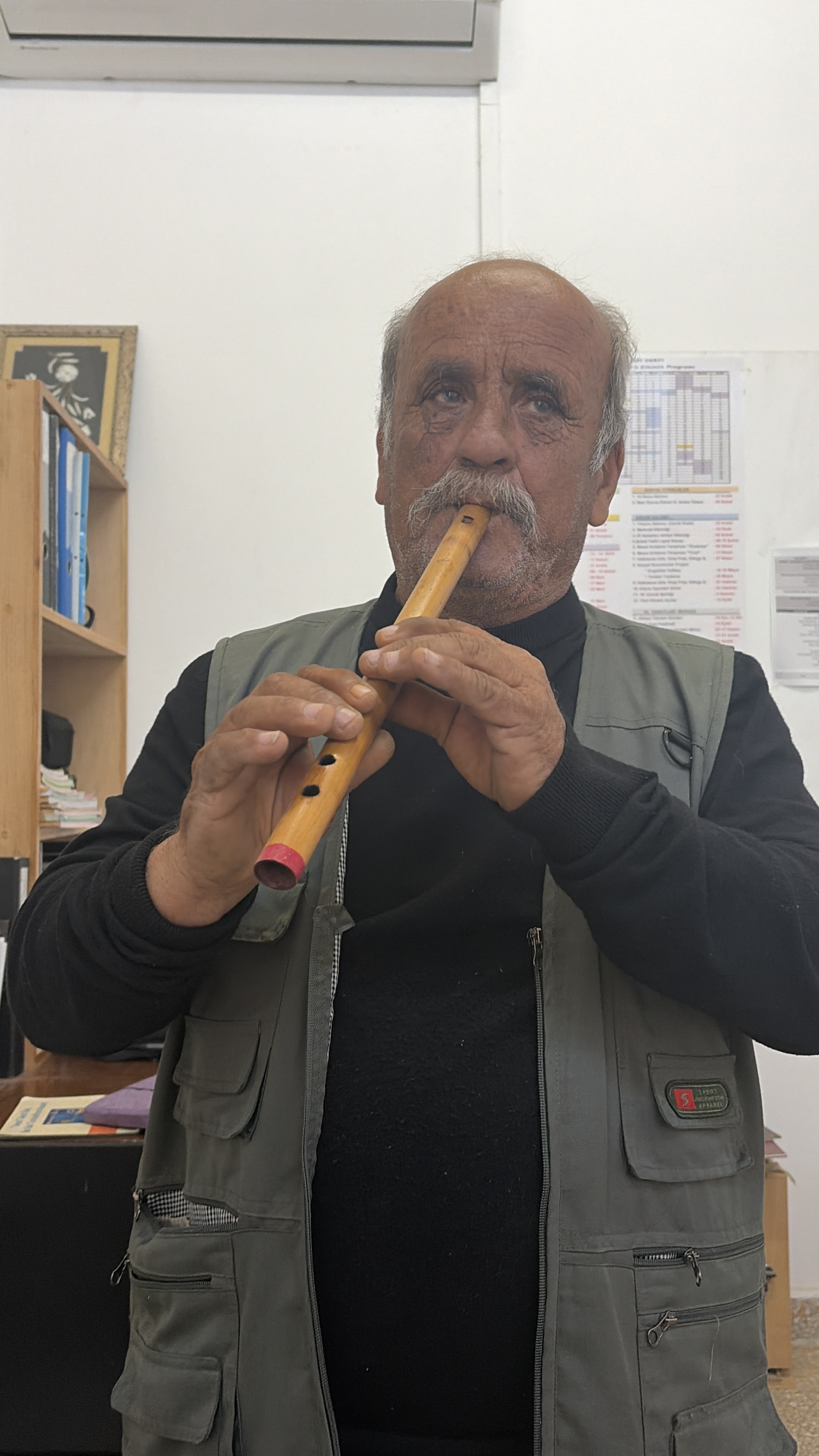
Similar Artisan List
Project was funded by European Union. Project’s main goal is to promote stronger participation of youth in reconciliation and peace processes for reunification of Cyprus, as well as raise awareness of the shared cultural heritage of the two communities.
Helpful Links
Contact Us


